

22. PUZZLERS
Don't get stuck

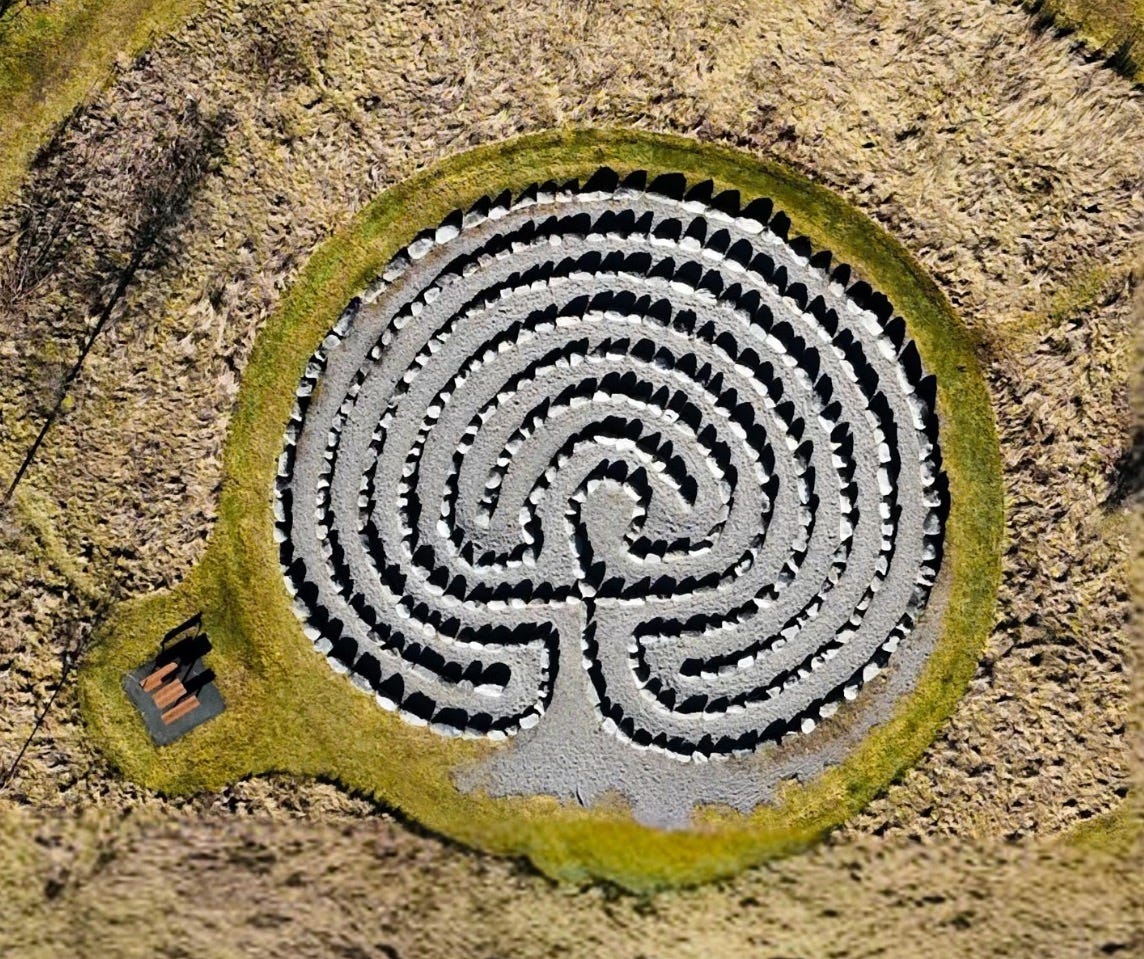
A friend invited me to be her partner in a speed puzzling competition. She’d attended one in the past, which had not gone well, and wanted to redeem herself. Her pitch to me was that this event would be easy: three hundred pieces, forty-five minutes on the clock, a nearby location. All she wanted to do was finish the puzzle within the allotted time. Super low stakes. Was I in?
I didn’t even know there were speed puzzling competitions. In my experience, puzzling happened on holiday with my family, luxuriating over a thousand pieces for days and days. It seemed frantic. Then again, I loved the thrill of landing that last piece. And I loved competing. Also, what a whacky story to share at a dinner party. Sure, I said. I’m game.
My friend had to remind me several times to register. She texted that she’d received a stack of puzzles over the holidays and was practicing regularly. Then, a month before the event, she called to schedule training. We need to figure out our plan. Oh, I thought. She’s serious.
NOTE: The Guinness World Record for completing a three-hundred-piece puzzle by one person is 9 minutes and 58 seconds. Top pairs puzzlers typically complete 300 pieces in 16 to 20 minutes. To finish in 45 minutes, one puzzle piece must be placed every 9 seconds.
We did some research on strategy and decided that one of us would start on the border, the other on the interior, focusing on a dominant feature, such as text, color, or pattern. Also, we would gather the edge pieces as we turned them over and make obvious groupings. And we wouldn’t clutter the center of the puzzle.
It sounded easy, but after our first try, we had fifteen pieces left on the table. We tried again, with the same results. In each attempt, both of us encountered periods when our brains spun out, trying over and over to make a piece work or searching for something that couldn’t be found. We tried calling “switch” when this happened, me moving to her section, and she to mine, but that made things even more disorienting and left more pieces on the table.
DO NOT GET STUCK became our mantra. If we found ourselves fixed on a section for more than a few seconds, we pivoted. If we perseverated over a piece, we put it down. We did not let ourselves coast. For me, the forced shift felt like brushing my teeth with the opposite hand or driving on the left side of the road. And the new strategy showed in our results: fewer pieces left on the table, until, finally, we were finishing puzzles with time to spare.
Though nervous, we were confident walking past the D&D gaming rooms, into the puzzling theater, where twenty six-foot tables were divided in half with blue tape, making space for forty teams. The two women beside us introduced themselves as moms from Palos Verdes. They told us that they competed for fun, that puzzling was their version of “mahjong”. They were kind and pumped us up, telling us not to worry and that we’d do great. They even loaned us one of their box lid holders so we could maximize space. Good luck, they cheered as we all counted down the clock.
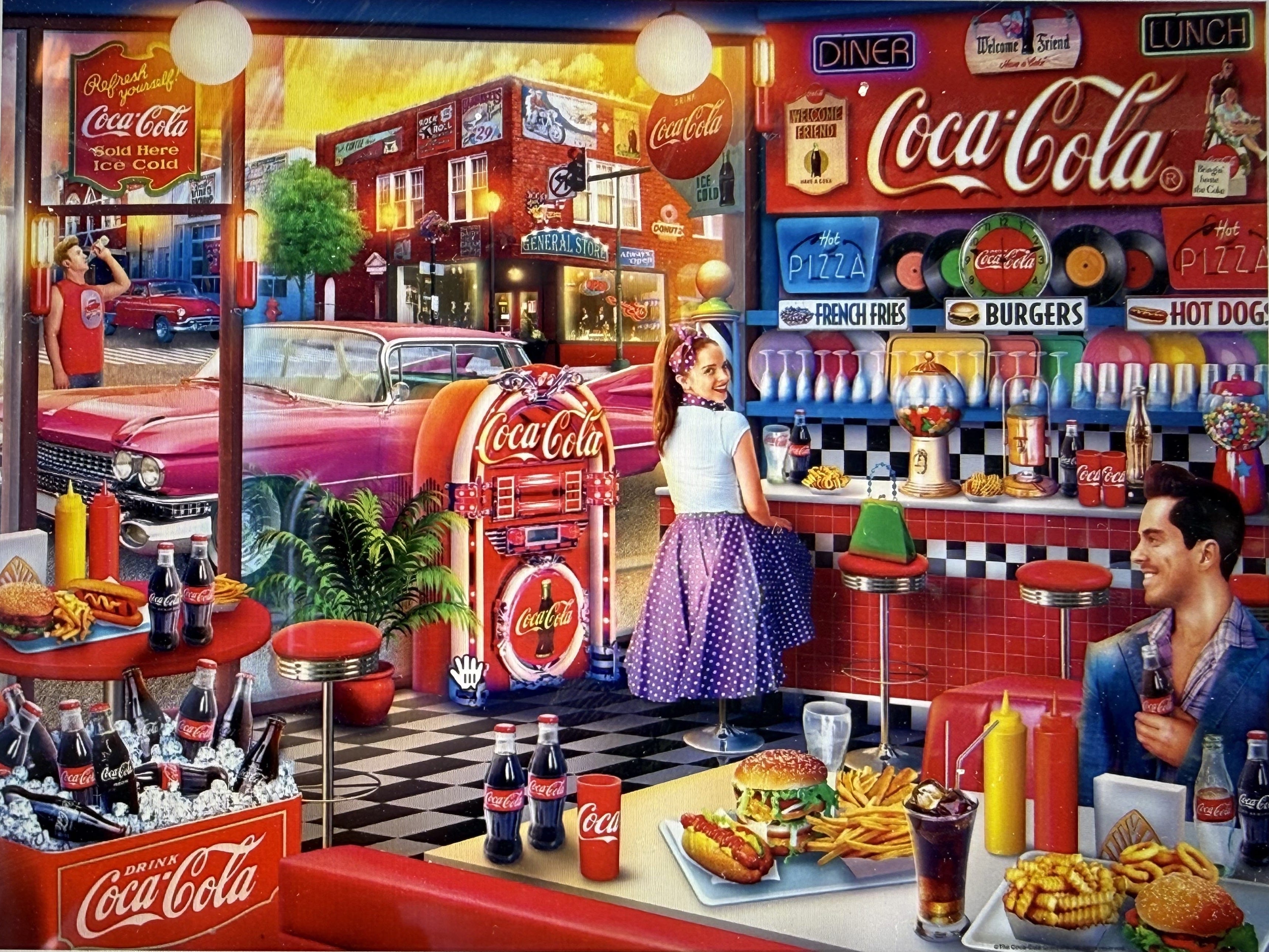
You know those movies where the kid gets on stage at the talent competition and freezes? About A Boy comes to mind, the scene where Marcus just stands in the spotlight, barely able to get out the words to Killing Me Softly. It was like that after the buzzer went off. We tore open the plastic mailer, dumped the pieces, and immediately choked. The puzzle—an old-timey diner with a million Coca-Cola logos, everything red or black-and-white check—looked impossibly hard. My head swam just trying to find the edges. Also, there was no space to work. We started dumping pieces in the middle and puzzling on top of each other. I yelled “switch” out of desperation because nothing was coming together, only to obsess for god knows how long over finding the crinkly French fries piece. By the time I finished two lousy borders, the MILFs beside us were high-fiving their success. What’s worse, they then looked on for the next twenty-five minutes as we tried to save face. When the judge counted our remaining pieces, they purposely skipped a bunch, presumably because it didn’t matter, or because there were too many to count, or they wanted us to feel better.
There is some good news. The beach moms invited us to join them for the four-person, five-hundred-piece event that followed (guilty, no doubt, for pretending they weren’t going to smoke us). With cool heads, they built the puzzle, pushing forward, communicating clearly, asking my partner and me for pieces of whatever section they were working on, never getting stuck. Forty minutes later, our team finished third.
I don’t know if I’ll compete in speed puzzling again after those mahjong mamas took us down. But I don’t regret the experience. I learned something really important about my brain: it needs to be uncomfortable once in a while. It needs to be disrupted and challenged. Otherwise, I might forget how to problem-solve.
ICYMI: A piece about forgiveness and the need to rest.

I am a hater of puzzles but I love this piece! Omg. The fact that you did this amazes me! The idea sends a shot of sheer terror up my spine. But my takeaway is I am stuck in so many places— in my thinking, habits and patterns…and I am most certainly stuck in my belief that I hate puzzles. 😂 Thanks for the inspo to try to shake things up and get unstuck! 🧩 ❤️